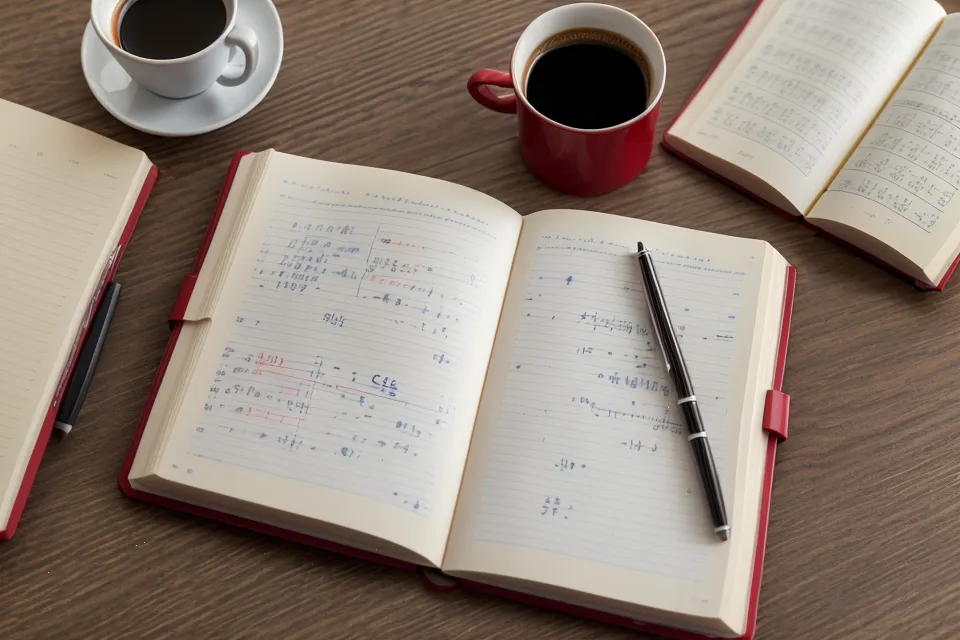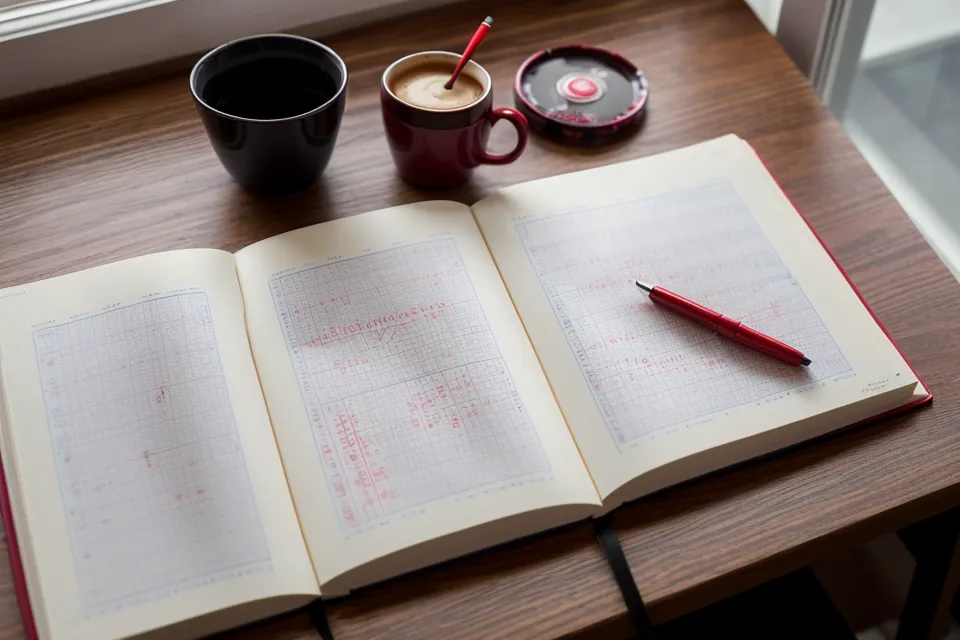
There's a notebook in my desk drawer at school that has outlasted three sets of Year 9 textbooks. Inside it: six months of EuroMillions tracking, written in red biro, next to a running tally of whatever an AI lottery tool had suggested for the same draw. I'm a maths teacher, not a statistician, and the whole thing started as a way to settle an argument I kept having with myself about lottery probability — whether any of it is knowable at all, or whether every strategy going is just expensive guesswork dressed up as confidence.
A quick note before we go any further: this post contains affiliate links, and if you buy something through one I earn a small commission at no extra cost to you. I only write about tools I've actually tested and logged results for in that same notebook. None of this is financial advice, so treat the lottery as entertainment and only spend what you're comfortable losing.
The Parallel Trial: Manual Tallies Versus AI Number Analysis
Before any of this got systematic, I tried something simpler: crowdsourcing picks from a few colleagues in the staffroom, on the theory that collective intuition might beat pure randomness. It didn't. What came back was mostly a cluster of birthdays and anniversaries, which is close to the worst strategy going — not because those numbers are less likely to be drawn, but because so many other players lean on the same dates, so you split any prize more often if you ever land one. That failure is what pushed me toward a proper parallel trial instead: manual frequency tallies against whatever the AI tools were suggesting, logged for every EuroMillions draw over six months (the full week-by-week breakdown of that log is a longer post of its own). On one side of the page, hand-drawn charts of the EuroMillions main pool of 50 numbers and the Lucky Star pool of 12. On the other, whatever the AI tools flagged for that same draw.
Right then, here's the maths everyone skips over. The jackpot odds sit at roughly one in a hundred and forty million, a figure that doesn't improve no matter what you're holding when you fill in the slip. That number is really about expected value, which is a different calculation from 'which numbers come up more often', and one that deserves its own post rather than a paragraph here. Odds also shift depending on which game you're actually playing — a EuroMillions line isn't the same shape of bet as a national-only draw, and comparing formats properly needs a reference table, not a guess. None of that stops a chart full of circled numbers from looking like it's telling you something specific, which is its own kind of visual trap, and building a frequency chart by hand from scratch teaches you more about that trap than a finished one ever will.

LottoChamp Spotted Patterns Faster Than My Red Biro
By the middle of the trial, I moved a good chunk of my tracking over to LottoChamp, mainly to see whether its historical database could catch something my hand tallies couldn't. Getting it configured properly took a bit of fiddling first — making sure the input settings were actually pulling the correct draw history mattered more than I expected, and I suspect a few people skip that step and then wonder why the output looks off. Once it was set up, the interface still looks like something from the early 2000s, but it updates its draw database every week, and it handles far more numbers at once than I can hold in my head: fifty main numbers and twelve Lucky Stars is already a lot for one game, and the software was running that arithmetic across dozens of past draws at the same time.
Whether that counts as proper AI or just much faster arithmetic is a question worth its own answer, and I'm sceptical enough to call it the latter until someone shows me otherwise. It didn't change the probability of consecutive lottery numbers coming up, because nothing changes that — each draw is independent of the last, which is the real reason a number that 'feels overdue' isn't actually due anything. Hot and cold numbers get thrown around constantly in lottery forums, and most of what people mean by the phrase doesn't survive contact with how the maths actually works, which is again a longer conversation than fits here. The more useful thing LottoChamp did was organise the chaos better than my scribbles ever managed, though any tool trained purely on past draws risks getting very good at explaining history without predicting anything real — worth remembering before trusting a backtested result too far. Ranking tools like this properly against each other, by something other than whoever has the flashiest sales page, is a separate job I keep meaning to finish.

Syndicate Math: A Completely Different Kind of Lottery Probability Problem
Standard probability advice tends to assume you're one person buying one line, and that advice quietly falls apart the moment you're running a syndicate — a group at work, say, pooling money for shared tickets. A syndicate isn't optimising for one person's chance of winning big; it's optimising for the group's collective expected return and the variance of outcomes across however many draws you play together, which is a genuinely different problem.
The goal isn't to find the 'best' set of numbers, because there isn't one — it's to spread the group's tickets so they cover more of the number field without everyone unconsciously drifting toward the same clustered dates and anniversaries, since two tickets that overlap heavily aren't really buying two separate chances. I half-joke to my class that if I ever want them to understand standard deviation without their eyes glazing over, the syndicate spreadsheet I built for a few colleagues makes the point better than anything in the textbook — the entire job of managing a group pool is minimising the swings in collective outcome over time, not chasing one big result. A tool like Lottery Defeated can help here, since its frequency analysis tools make it easier to coordinate who's covering which numbers across a set of tickets, so the group isn't quietly duplicating effort without realising it.

So Did the AI Actually Outperform Me?
By around the fourth week of the trial, something small happened that I couldn't quite wave off. I'd picked up a quick pick at the corner shop near Didsbury Village on the way home, more out of habit than any real intention, and when I checked it against my chart that evening, three of the numbers on the slip were ones I'd already flagged by hand as high-frequency. One match doesn't prove anything on its own — that's exactly the sort of thing a maths teacher is supposed to warn you about — but it was enough to make me start paying closer attention to how often the AI tool's picks and my manual flags were landing on the same numbers instead of drifting apart. Probability stayed exactly where it always was; what changed was how quickly the pattern got spotted. The AI wasn't predicting anything in the sense people want it to — it was highlighting where the EuroMillions Lucky Stars had been turning up most often relative to the main pool, which is arithmetic, not foresight.
A reader named Dariusz Wojcik emailed not long after a frequency-chart post went up, asking whether this kind of tracking holds up once you move between different lottery formats. He plays both EuroMillions and a Polish national draw, and his point was that the shape of the number pool matters more than any surface pattern you think you're spotting. He's right, and it's a sharper observation than most of what lands in my inbox — a method tuned to one pool size and one set of draw rules doesn't automatically carry over to another, and treating every lottery format as interchangeable is its own quiet mistake. For anyone who wants a simpler entry point than LottoChamp's database, Lotto Master Key works more like a straightforward wheeling system — a way of spreading a fixed set of numbers across several tickets so you cover more combinations without just repeating yourself — and it's a lot less overwhelming if you're only just moving away from Quick Picks. I've watched people give up on lottery analysis entirely because they tried to go from nothing to spreadsheet overnight; matching the method to your own patience matters more than whose database is bigger.
Closing the Drawer for the Weekend
Six months and a stack of logged draws is still a small sample by any honest statistical standard — nowhere near enough to say anything with real confidence, which is exactly why a proper fifty-draw head-to-head between AI picks and quick picks would be a more rigorous test than my notebook ever managed. My neighbour Fenella asks about 'the numbers' most Wednesday mornings at the recycling bins, and I still don't have a tidy answer for her beyond: the tool is faster, not smarter, and faster isn't nothing when you're working across fifty numbers and twelve Lucky Stars every single week.
I did a final review last week of the whole six months, and I'm still a maths teacher, still playing EuroMillions, and still deeply unconvinced by anyone promising a guaranteed system. What's changed is that I've stopped doing the manual tallies by hand — the time I save checking historical patterns through LottoChamp is time I'd rather spend doing almost anything else, marking included. I'd still like more transparency from these tools about how a prediction actually gets generated, rather than taking the sales copy at face value, and that audit is a longer piece for another time. I'd also flag the one real risk that has nothing to do with the maths itself: if a tool, or your own notebook, starts to feel like a reason to keep playing numbers you've already sunk money into, that's the trap worth watching for, not whatever pattern you think you've spotted.
Tracking what the whole experiment was actually costing, separate from the numbers themselves, turned out to matter just as much, and that breakdown deserves its own post because the spending habit matters at least as much as which numbers get circled. Locking the notebook away for the weekend still gives me a strange bit of peace. Maths and technology can sit next to each other even somewhere as unpredictable as the lottery. If you want to see how LottoChamp handles real draw data for yourself, you can check its current features here — just know the price on the vendor's page can change, and it comes with a sixty-day money-back guarantee and no recurring fees, which is a reasonable bit of cover for anyone who likes to check the maths before committing. Play within your means, stay honest about the odds, and maybe start your own secret notebook for a while. It's the most straightforward way to see the truth of it for yourself.