
It was late one evening, and I was hunched over a stack of Year 10 trigonometry papers that smelled faintly of damp school corridors. My laptop screen was flickering with an AI dashboard I’d been testing, its algorithms churning through years of Paris draw data. In that moment, I realized I was living a double life: a sensible math teacher by day, and a secret lottery analyst by night.
I’ve played the EuroMillions every week since I started teaching in Manchester. It’s my little Tuesday and Friday ritual. But what really gets my back up—and my students will tell you I’m a stickler for logic—is the absolute nonsense you find online. 'Guaranteed systems' and 'secret patterns' that defy every law of mathematics. Frustrated by the noise, I decided to run my own experiment. I bought a plain notebook, tucked it into my desk drawer at school, and spent six months—from late March 2026 through mid-September 2026—tracking every draw.
The Methodology: Notebook vs. Machine
My approach was simple but disciplined. On one side, I had my manual frequency charts—the kind of basic statistical regression any decent A-level student could put together. On the other, I used a suite of high-scale AI probability tools that claimed to use neural networks to identify 'non-random' tendencies in the draws. I wasn't looking for a magic wand; I wanted to see if the AI could actually outperform a woman with a red pen and a calculator.
Every Tuesday and Friday evening, after the results were beamed from Paris, I’d update my records. The EuroMillions is a beast of a game: you’re picking from a EuroMillions main number pool of 50 and a EuroMillions Lucky Star pool of 12. Mathematically, the Jackpot winning odds sit at a staggering 1 in 139,838,160. Right then, those aren't exactly 'favorable' odds, but for a math teacher, they are a fascinating exercise in the limits of prediction.
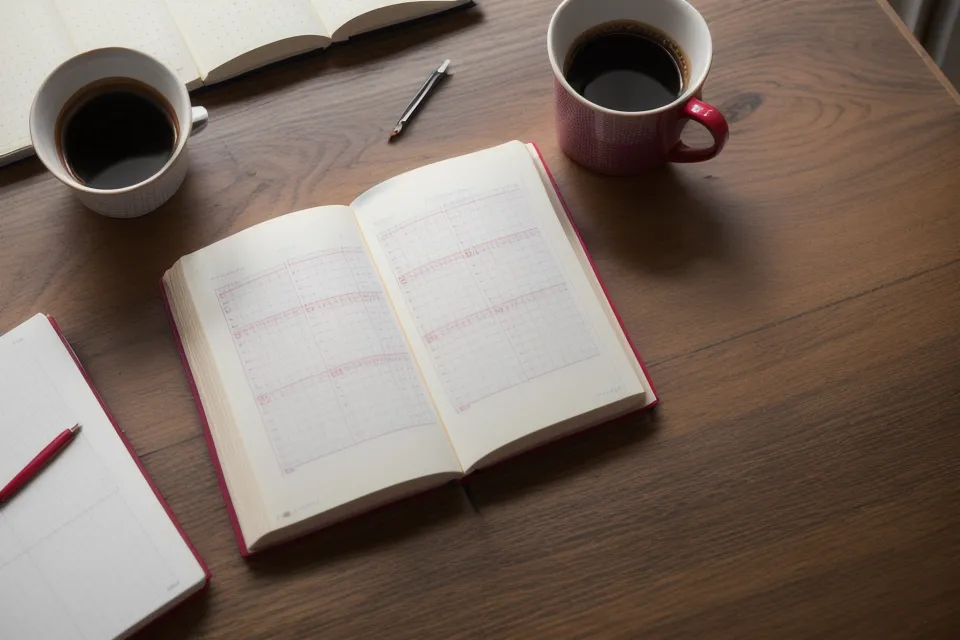
By late April, my notebook was already becoming a bit of an obsession. I remember the faint scent of dry-erase markers on my fingers while flipping through my secret notebook in the staff room, hiding it behind a copy of the Times Educational Supplement whenever a colleague walked in. I felt a flicker of guilt explaining independent events to my students while secretly hoping my AI tool found a pattern in the noise. It’s the ultimate teacher’s hypocrisy, isn’t it? Teaching them that a coin has no memory, while I’m checking if the number 27 is 'due' for a comeback.
The Mid-Summer Reality Check
The real test came on one humid Tuesday evening in July. The Manchester air was heavy, and I was sitting in my garden with a lukewarm tea, comparing the AI’s 'hot' number predictions against my own notebook. We both flagged a specific 'cold' number—one that hadn't appeared in months. According to the Gambler's Fallacy, many people believe that if an event happens less frequently than normal, it’s 'bound' to happen soon. In reality, the balls have no memory of where they landed last week.
Here is the thing though: the AI wasn't just looking at frequency. It was looking at cluster formations and interval gaps. When the Friday draw came around, that cold number didn't show up. Instead, two numbers from the previous Tuesday repeated themselves perfectly. It was a beautiful, stubborn display of randomness. It reminded me that while we can map the past, the future of a vacuum-mixed drum of balls remains blissfully indifferent to our spreadsheets.
During this period, I also began to realize something that most 'pro' lottery tipsters never mention. Choosing frequently drawn numbers actually decreases your expected payout by increasing the likelihood of sharing the jackpot with other players. If you pick the 'hottest' numbers because a website told you to, you’re likely picking the same numbers as ten thousand other people. In the UK, where prizes are tax-free and paid as a lump sum, the goal isn't just to win—it’s to win alone. If you're interested in the logic behind this, I previously wrote about best mathematical tips for choosing EuroMillions numbers without hype which dives deeper into the 'crowd' effect.
The September Term and Final Grades
As the first week of the September term rolled around, I decided to close the experiment. I had six months of data: 52 draws, hundreds of AI-generated lines, and my own manual regressions. What did I learn? I'm not a professional gambler, and I certainly don't have a mansion in Cheshire yet. However, the AI tools were consistently better at identifying 'non-obvious' combinations—lines that avoided common human biases, like birthdays or lucky sevens.
I’ve spent a lot of time grading AI lottery predictors against my own frequency charts, and the results were surprisingly nuanced. The AI didn't 'predict' the winning numbers—no one can—but it did a much better job of managing the probability landscape than my manual tallying could ever do. It processed the frequency of the 50 main numbers and 12 stars at a scale that made my notebook look like a primary school project.
I’m obviously not a statistician, and you should talk to a professional if you find yourself spending more than you can afford on any game of chance. The lottery is entertainment, not an investment strategy. It has a negative expected value, meaning on average, you will lose money. But as a math teacher, I find the 'why' and 'how' of those 1 in 139,838,160 odds endlessly entertaining. For more on my specific findings, you might enjoy my AI vs. Probability: A Manchester Math Teacher’s Six-Month Lottery Tracking Experiment.
On that final Friday in mid-September, I tucked the notebook back into my drawer. I didn't find a way to beat the system, but I did find a way to understand it better. AI can process the noise faster than I can, but the ultimate equalizer remains the same: the sheer, glorious randomness of the draw. My students might be delighted to know their teacher plays the lottery, but they’d be even more impressed to know she does it with a neural network and a healthy dose of skepticism.