
A spreadsheet holding fifty years of EuroMillions results and an AI lottery tool trained on those same results are, on the surface, doing the same job as any lottery analysis: finding structure in numbers that are supposed to be governed by probability and nothing else. Only one of those two approaches actually saved me any time over six months of testing, and it wasn't the one I built myself — a maths-teacher-tested verdict, not a marketing one.
Quick disclosure before anything else: some of the links below are affiliate links, and if you buy through one I earn a commission at no extra cost to you. I'm a maths teacher, not a financial adviser, and EuroMillions carries a negative expected value no matter which tool sorts your numbers for you — this is entertainment spending, not an investment strategy, and everything below comes from six months of my own tracking rather than a lab study.
Two Different Ways to Play the Same Odds
I got into this after a stretch of playing the same birthday-combination numbers for an entire year and watching them perform exactly as well as any other six digits, which is to say not especially well at all. That stubbornness is what pushed me toward frequency analysis in the first place: tallying how often each of the fifty main numbers and twelve Lucky Stars had actually come up, rather than trusting a set of digits because they meant something to me personally.
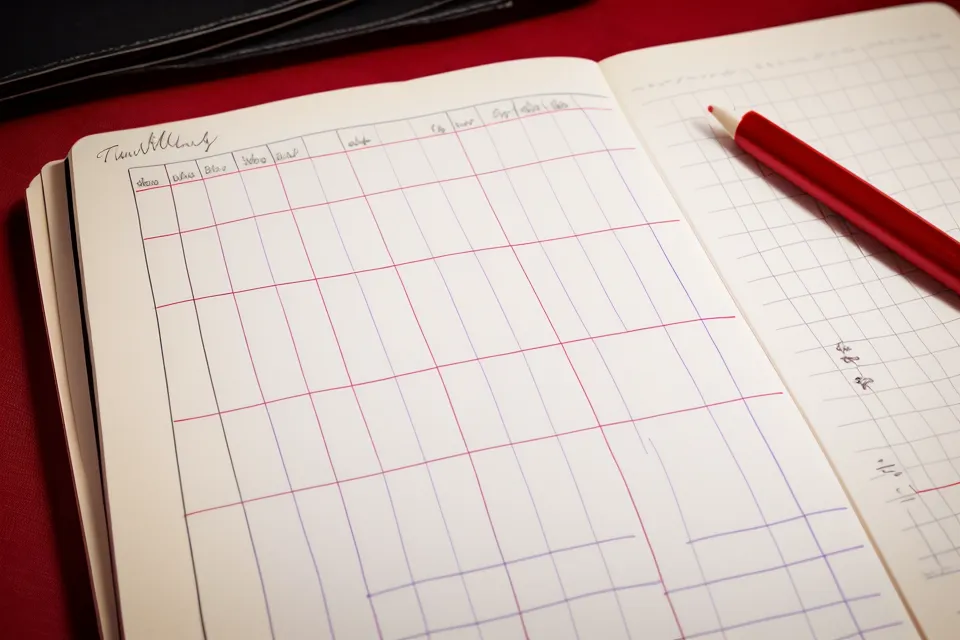
The habit properly took hold one evening marking a stack of Year 11 papers, when I glanced at my draw tracker in the margin of my planner and noticed the same three numbers circled three weeks running — not a sign of anything, statistically, but enough of a nudge to make me start keeping the tracker properly instead of scribbling it on whatever bit of paper was nearest.
A friend of mine spends most of her weekends renovating a Victorian terrace in Levenshulme, one room at a time rather than gutting the whole house at once, which is roughly the approach I took with software too — trying one AI lottery tool properly before adding a second. The first one I picked up was LottoChamp, mostly out of curiosity about whether its algorithm would agree with any of my hand-tallied frequency numbers.
Running Three AI Lottery Tools Against My Own Numbers for Six Months
Every week for six months, I generated a set of numbers by hand and compared it against picks from three tools tested side by side: LottoChamp, Lottery Defeated, and Lotto Master Key. Checking Saturday's results usually happened on a walk through the Northern Quarter before the shops opened, which is about as unglamorous as confirming you've matched two numbers and nothing else. None of us — me or the software — was hunting for a jackpot; the odds of that sit somewhere around one in a hundred and forty million, a number large enough that it stops meaning anything intuitive. What I was actually tracking sat much lower down the prize table, in the tier where the odds of winning anything at all are closer to one in thirteen.
What the AI side of that comparison adds isn't foresight; it's a pattern-detection layer running the same kind of lottery analysis I was doing by hand, just across far more draws and far faster than I could manage between lessons.
LottoChamp is the one I leaned on hardest, largely because its database reached back further than anything I'd built by hand, and its coverage stretches well beyond EuroMillions, all the way to the American Powerball range. A filter tuned on one country's number format doesn't carry its logic cleanly into a completely different game, though — EuroMillions and Powerball don't share a number range or a prize structure, so the two need separate tuning rather than one shared model.
The Spreadsheet in My Desk is where every draw, every near-miss, and every pound spent got logged — the actual working behind this comparison, if you want the method in full, and really its own piece of bookkeeping separate from any probability question. Reading back through it, the clearest pattern wasn't about winning; it was about how each tool handled the basic fact of randomness in a draw that has no memory of what happened the week before.
Does Filtering Out 'Dead' Combinations Actually Help?
Here is the thing though: none of the three tools can see next Tuesday's draw. What they're actually doing is filtering out combinations that sit a long way from any historical pattern — the kind of set I'd sometimes pick myself because a number felt 'due,' which is exactly the instinct a maths classroom is supposed to train out of you. Software doesn't have that instinct. It just has data, and data has no loyalty to a number that hasn't shown up in a while.
Ask any of them directly whether they track 'hot' and 'cold' numbers, and the honest answer underneath the marketing language is that they're measuring distance from an average, not predicting what happens next.
In practice, the sets I picked by hand tended to have a wider standard deviation from the historical norms than the tool-generated ones did, which sounds impressive until you remember that a tighter spread doesn't make a draw more likely — it just makes the ticket look more sensible to a human reading it.
Lotto Master Key takes a slightly different route. Rather than filtering, it leans on a wheeling system that spreads a handful of chosen numbers across multiple lines — a way of managing coverage across more combinations, not a way of shortening the actual odds on any single line, which is worth knowing before you assume more lines means better maths.
Setting any of the three up asks for the same handful of basic inputs — which game, which stretch of draw history, how many lines to generate — and none of that configuration touches the odds sitting underneath the draw itself.
LottoChamp, Lottery Defeated and Lotto Master Key, Compared
Before running any of this, I'd sketched a rough rubric to judge the three against: size of the historical database, how often it updates, refund terms, and how much friction there was in generating a set before the bell went for period one. Checking that rubric against six months of actual evidence, some of those criteria genuinely predicted something useful, while one or two turned out to be entirely cosmetic; a slick dashboard doesn't change what's underneath it.
None of the three show their working in a way I could actually audit line by line, which is worth sitting with before assuming 'AI-powered' means the maths has been checked by anyone besides the people selling it.
Six months of EuroMillions draws is also not a large sample — nowhere near enough to iron out ordinary variance, for the same reason nobody trusts a single poll of thirty people to call an election.
The notebook was also useful for catching myself wanting to keep a set purely because I'd already paid for the software that generated it, which is a different trap to believing in overdue numbers but every bit as real.
Lottery Defeated sits in the middle of the three: solid frequency modules, a more active user community sharing picks and comparing notes, though I found the dashboard more cluttered to navigate between classes than the plainer layout I'd got used to elsewhere. Lotto Master Key stays deliberately lean by comparison, trading database depth for speed, with less overwhelm than either of the other two.
Simplicity versus database size is a trade-off I've picked apart in more depth in Probability Over Hype: My Honest Comparison of AI Lottery Tools After Months of Tracking, for anyone who wants the granular version rather than the summary here.
Which One Should You Actually Use?
So here's the actual trade-off, stripped of marketing language.
If you want the biggest historical database, the widest game coverage, and a one-time purchase rather than a recurring subscription, and you don't mind an interface that still looks a little dated, using a tool like LottoChamp is what turned my weekly flutter into something closer to a controlled process — it's what I still reach for most weeks, and it did the most to remove gambler's-fallacy thinking from my own picks.
Lottery Defeated earns its runner-up spot if the community angle and dedicated modules for multiple game formats matter more to you than raw database size, and Lotto Master Key is the one to reach for if you just want a set generated before the bell goes and don't need the bells and whistles.
None of that changes the fundamental odds underneath any of these probability tools — a EuroMillions ticket costs the same whether the numbers on it came from a red biro, an algorithm, or a Quick Pick machine, and what a decent one buys you is a more honest process, not better odds. LottoChamp is the one I'd suggest starting with if you want the same scale of historical data I used throughout this six-month comparison.
| Product | Rating | |
|---|---|---|
| LottoChamp Top Pick | 9.2 | Read More → |
| Lottery Defeated | 8.5 | Read More → |
| Lotto Master Key | 7.9 | Read More → |
LottoChamp
Pros
- ✔ Massive historical database updated weekly
- ✔ Excellent pattern filtering for EuroMillions and Powerball
- ✔ Very fair 60-day money-back guarantee
- ✔ Professional-grade frequency analysis
Cons
- ○ Interface feels a bit 2010s retro
- ○ Requires a bit of a learning curve for the advanced modules