
Whether software can really out-think a random number generator is a question that lands in my inbox more often than any other once people find out I spend evenings running AI probability tools against real EuroMillions results instead of just picking birthdays like most players do. They want a math teacher's perspective on what proper lottery analysis actually says, not a sales pitch, and that's fair enough to ask for, though the honest answer needs more than one paragraph to earn.
Quick disclosure before anything else: some of the links further down are affiliate links, and I earn a commission if you buy through one, at no extra cost to you. I only write about tools I've actually run against real draws, and nothing here is financial advice. EuroMillions carries a negative expected value regardless of which app sits between you and the ticket machine, and no algorithm changes that arithmetic.
The Myth: That Software Can Predict EuroMillions Patterns
Here is the thing though: an algorithm cannot predict an independent random event, and EuroMillions draws are about as independent as random gets. Each draw pulls five balls from a pool of fifty and two Lucky Stars from twelve, and the machine has no memory of what came out the previous Tuesday. If a number hasn't shown up in ten draws, it isn't 'due' — that's the gambler's fallacy, the same faulty logic that makes people expect a coin to land tails after five heads in a row, when the coin remembers nothing at all.
Most of the bad advice circulating online treats the lottery like a system waiting to be cracked: hot numbers, cold numbers, wheeling charts, a birthday combination someone's used since childhood. None of it moves the odds by a fraction. What surprised me once I actually started testing AI lottery tools against my own hand-built frequency chart is that the honest ones don't claim to predict anything either. They just filter.
Where My Manual Frequency Chart Fell Apart
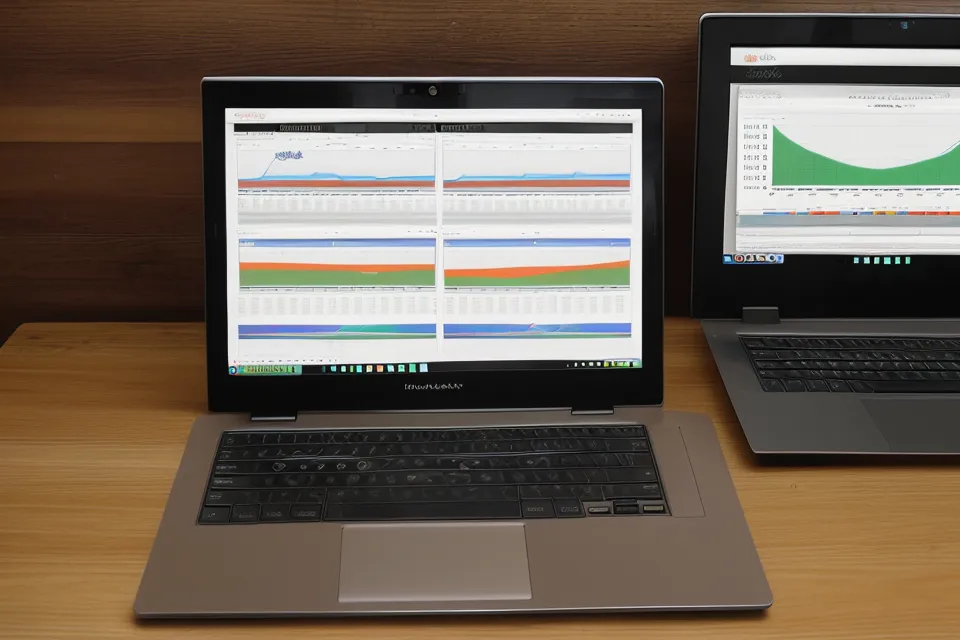
My own system was a printed frequency chart pinned to the wall of the spare room I use as a study in Didsbury, updated in red biro after every Tuesday and Friday draw, sitting between two monitors: draw database on one screen, whatever I was writing on the other, a mug of tea going cold near the keyboard more often than not. It worked in the sense that I could see which numbers had turned up more than others. It failed in the sense that mattered, because raw frequency tells you almost nothing about what happens next, and I once lost an entire Sunday morning debugging a spreadsheet formula before realising I'd been counting the wrong year's draws for half the file.
It occurred to me around then that explaining standard deviation to a class of teenagers might land better with this chart as a visual aid than anything in the textbook.
On a wet Saturday I ended up in Manchester Central Library, laptop plugged into a reading-room socket, trying to piece together draw histories further back than any free website kept on record. My friend Zainab, who I've known since a first-year maths lecture and who now writes data-scraping scripts for a living in Leeds, looked at the script I'd cobbled together and tidied up half of it in ten minutes flat. She still won't play the lottery herself, on principle, which says something about how a working software developer reads the odds.

What AI Probability Tools Actually Do
The honest version of a tool like LottoChamp doesn't hunt for a winning combination; it rules out the sets that almost never come up in real draws, things like five numbers in a straight run, or a ticket where every ball is even. That's the useful part: not fortune-telling, just narrowing the field to combinations that look statistically like actual EuroMillions results, the way a weather forecaster narrows tomorrow's outcomes without ever promising sunshine.
If you want the fuller version of how that testing went, I've written up my six-month experiment with AI lottery tools findings in more detail elsewhere on the site. One lunch break, eating a sandwich at my desk between lessons, I watched the tool's picks against Tuesday's results and realised it had matched two of the balls again, the third time that particular overlap had happened, which still isn't evidence of anything beyond ordinary variance. Running two methods side by side is the only honest way to tell whether a tool adds something beyond noise, and it takes more than one good afternoon to know.
The Guide I Wish I'd Never Bought
Before I found tools that were upfront about their limits, I paid for a 'guaranteed lottery prediction' PDF guide advertised on Facebook, the kind of thing that promises a system and delivers forty pages of confident-sounding nonsense. It told me to weight recent draws more heavily, track numbers that were supposedly 'due,' and rotate through a fixed set of combinations on a schedule. None of it beat picking numbers at random, because none of it could — the maths underneath was identical either way, just dressed up with more jargon. That failure taught me more about what to look for in a genuine tool than any tool's own marketing page ever has.
Testing LottoChamp, Lottery Defeated, and Lotto Master Key
LottoChamp is the one I keep coming back to, mainly because it explains why a combination got filtered rather than just handing you a list of numbers to buy, and that kind of transparency matters more to me than any flashier feature the competitors advertise. It covers several lotteries from one dashboard, and its historical database goes back further than anything I managed to piece together by hand. A generous money-back window means you can actually run your own test over several weeks of draws rather than take my word for how it performs, and in the world of probability, sample size is everything — a single lucky week proves nothing at all.
Lottery Defeated leans into the two big American games instead, with dedicated modules and an active community trading picks, which might suit you if that's genuinely what you play, though it sits outside what this site covers. Its Gravity score sits at 12, a rough measure of how many other affiliates are actively promoting it, and I found the dashboard more cluttered than I'd like for something meant to make numbers clearer, not murkier. Lotto Master Key goes the other direction: a simpler interface with a conversion rate of 1.66 percent, which says its sales page does its job, but a noticeably smaller draw database than LottoChamp's, and updates that arrive less often.
Setting Up a Tool Without Falling for the Sales Pitch
Whatever tool you pick, the configuration matters more than the marketing copy — which lottery you're feeding it, how many years of draw history you point it at, whether you let it suggest a full ticket or just flag combinations to avoid. I judge a tool on whether it explains its own filtering logic and whether its database updates on schedule, not on how confident the sales page sounds. And here's a rule worth keeping regardless of which tool you choose: decide your weekly spend before you look at a single prediction, because chasing a bad week to 'get back' what it cost you is the sunk cost fallacy wearing a lottery ticket, and no algorithm fixes that particular piece of maths.
A Reader's Ledger and the Question I Still Get
One reader, Neville, tracks every EuroMillions draw in a handwritten paper ledger and sends me notes that tend to arrive about a week after each draw, precise as ever, comparing his tally against whatever I've written. He got in touch originally after comparing my frequency chart to a structural load calculation, which is about the most engineer thing anyone has ever said to me. For anyone who wants the longer version of that comparison, I've laid out six months comparing AI lottery picks to my own frequency charts in a separate piece, pattern by pattern.
Where the Odds Actually Sit
Different EuroMillions-style games have different formats — main pool size, star pool size, how many numbers you need to match — and those format differences set the base odds before any tool gets involved, worth knowing if you ever compare notes with someone playing a different national variant. None of that changes the answer to the question I opened with: no, software cannot predict a random draw, and anyone telling you otherwise is selling something. What a decent AI tool can do is stop you wasting money on combinations that are mathematically almost impossible to occur, which is a smaller, duller, more honest claim than the marketing usually makes it sound — but it's the true one.

The One Rule I'd Actually Stand Behind
If you take one rule from all of this, let it be this one: treat any lottery tool, AI or otherwise, as a filter for bad combinations, never as a prediction engine, and judge it by whether it can explain its own logic rather than by how big the number on its sales page looks. That's the whole difference between a tool worth paying for and a PDF full of confident nonsense. Given the choice, I'd rather spend a Friday evening running a proper comparison between LottoChamp's filtering and my own chart than pretend either one has cracked something that, mathematically, cannot be cracked.
So if you're going to spend money on a EuroMillions strategy, spend it on something that treats you like you can handle the maths. LottoChamp remains the one I recommend first, because it's built for people who want to see the filtering logic, not just receive a list of numbers and a promise. Lottery Defeated is worth a look only if American games are genuinely your focus, and Lotto Master Key suits someone who wants the simplest possible interface and doesn't mind a smaller database. None of them will make you rich. All three, used honestly, can at least stop you throwing money at a combination that never had a realistic chance to begin with.
LottoChamp
Pros
- ✔ Advanced AI pattern detection that filters out improbable combinations
- ✔ Includes a massive historical database updated weekly
- ✔ Generous 60-day money-back guarantee for testing
- ✔ Handles multiple international lotteries with one tool
Cons
- ○ The interface feels slightly dated compared to modern apps
- ○ Requires a higher upfront investment than basic spreadsheets