
A spreadsheet never gets tired of counting to fifty. I do, usually around the third recount of a EuroMillions frequency chart with a cup of tea gone cold beside it. This piece is my honest maths-teacher review of AI pattern detection tools set against my own lottery-probability notebook — what actually happened, not what I hoped would.
Quick disclosure before anything else: this post contains affiliate links, and if you buy through one of them I get a small commission at no extra cost to you. That's the only reason any of this pays for itself — I'd be running these comparisons in my notebook either way.
Two Systems, One Kitchen Table
I've kept a hardback notebook with squared paper for two years now, one column for my own manual frequency counts. Six months ago I added a second column for whatever an AI tool recommended, mostly to see whether software was actually more disciplined than my own brain, or just faster at being wrong. That side-by-side habit is what statisticians would call parallel testing, though I've never once used that phrase in the staffroom.
Basic probability says none of this should matter much either way — a random draw doesn't remember what an algorithm decided about it the week before, and it definitely doesn't remember what my notebook thinks. Numbers don't owe anybody anything for staying away a while, however much that itch to spot a pattern wants to tell you otherwise.
The EuroMillions main pool is 50 numbers plus 12 Lucky Stars, and once you've logged a decade of draws that itch gets loud. Mine tends to show up on a Sunday morning walking the loop around Sale Water Park, half-wondering whether this week's numbers "feel" different — which is precisely the kind of thinking a maths teacher ought to know better than to trust.
My neighbour Fenella has taken to asking about "the numbers" whenever we're both out at the recycling bins on a Wednesday, which tells you how quietly this kind of hobby spreads down a street.

What Does AI Pattern Detection Actually Do With Fifty Numbers?
LottoChamp is the tool I've leaned on most for this comparison, partly because it's a one-time purchase with no recurring fee, and partly because it ships with a historical draw database that updates weekly, which matters more than any promise about winning. What it's doing isn't magic — it's cross-referencing which numbers cluster together across years of draws, rather than just counting single-number frequency the way my notebook does. That's a genuinely different question to ask of the same data, frequency analysis on one side and something closer to pattern detection on the other, though neither one changes the odds of Saturday's draw. The laptop fan spins into a proper whirr every time I set it sorting the full draw-history file, which is a small, satisfying reminder that this is arithmetic, not intuition.
I wrote about how I structured that comparison in more detail here: Probabilities and Notebooks: My Six-Month Reality Check of AI Lottery Tools, if you want the fuller version.
Not everything I tried held up. Early on I took tips from a YouTube channel built almost entirely around numerology-based picks, on the theory that some numbers simply carry more weight than others — which falls apart the moment you remember that a numbered ball has no memory of what it used to mean for somebody's birthday. That's really just a dressed-up version of the hot-and-cold-numbers debate: a number that hasn't shown up in months isn't "due" any more than a coin that's landed heads five times owes you a tail on the sixth flip.
Running a Syndicate Changes the Maths
Here's an angle you don't see discussed much: if you're the one running a lottery syndicate for a group of colleagues, your job isn't just chasing a win, it's protecting the size of it. Popular birthday-range numbers, one through thirty-one, get picked by thousands of other players too, so hitting those means splitting a jackpot far more ways than it needs to be split. A tool that filters out the most commonly picked human combinations doesn't shift your expected value on paper, but it does change what you'd actually walk away with if your numbers ever landed, which is a distinction most lottery advice completely ignores. Lotto Master Key is the simpler of the tools I've tested on this front, with a smaller draw-history database than LottoChamp's and less frequent updates, but the syndicate organisers I've swapped notes with seem to like that it doesn't try to overwhelm them with features.
A reader called Dariusz Wojcik emailed me after one of my frequency-chart pieces to ask whether the same method holds up across a Polish Multi Lotek pool structure as well as EuroMillions, which is a fair challenge — the maths behind a 50-number pool doesn't automatically transfer to a differently sized one, and assuming it does is its own quiet trap. It's a bit like the sunk-cost thinking that keeps people chasing a system after months of losses: pattern recognition in one game doesn't earn you credit in another just because the interface looks the same.
Week Eight: When the Notebook and the Software Agreed
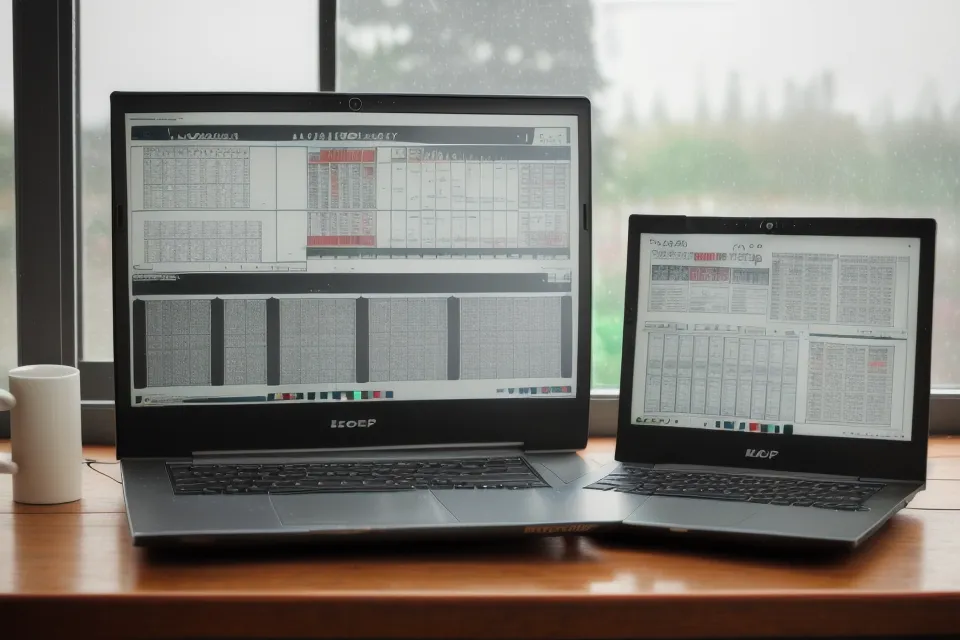
By week eight of the comparison, both columns in my notebook were pointing at the same three numbers for the first time. I remember sitting at the kitchen table on a Friday night, pencil in one hand, laptop balanced on a pile of marking, watching my own hand-drawn frequency chart and LottoChamp's shortlist land on the same trio almost by accident. It didn't mean anything predictive — EuroMillions doesn't care what either column says — but it told me the two methods were at least measuring the same reality, which is not nothing after weeks of feeling like I was comparing a torch to a floodlight.
A few weeks also went to Lottery Defeated, which has a genuinely active community of players trading picks and frequency screenshots, plus a proper number-frequency toolkit built into its dashboard. It costs more than LottoChamp, and the dashboard took a good while to learn my way around, so it didn't become my everyday tool — but if you want a community around the numbers as much as the numbers themselves, it's worth a look.
That shift gets the fuller write-up in Why My Maths Notebook and AI Pattern Detection Changed How I Pick My EuroMillions Numbers, if the syndicate angle is what brought you here.

The One Lesson I'd Actually Pass On
So here's the one thing worth taking from all these weeks of side-by-side columns, more than any single result: a tool is only as useful as the discipline you bring to reading it. LottoChamp earned its place in my weekly routine because it does the boring cross-referencing faster and more consistently than I can manage after a full day of teaching, not because it has found some code the draw machine forgot to hide. Use a tool like that to strip out your own bias, never to override the maths, and you're using it about as well as it can be used. If you want to see how it stacks up against everything else I've tested, I've ranked the lot properly in Ranking the Best Lottery Analysis Software Based on Mathematical Logic — notebook first, opinions second, same as always.