
Understanding how an AI probability tool that spots a genuine pattern in a single-country draw behaves once you point it at a jackpot pooled across nine countries requires careful testing. That question sat unresolved on my desk for the better part of a school term, long after I'd given up trusting lottery strategy content and gambling-maths forum threads that treat every draw as the same mathematical animal.
Quick disclosure before anything else: some of the links further down are affiliate links, and if you buy one of the lottery tools I mention, I earn a small commission at no extra cost to you. I've tested each platform myself and logged the results in the same notebook I use for marking, and I should say upfront — I'm not a statistician or a professional gambler, just a maths teacher who plays EuroMillions and gets genuinely annoyed by advice that ignores basic probability.
The Gambling Maths That Most Lottery Strategy Advice Ignores
Right then, here's the setup I've been running since January. Every week I track two different animals: the UK National Lottery's Lotto draw, which picks six numbers from a pool of fifty-nine and stays entirely within one country's ticket sales, and EuroMillions, which pools tickets from nine participating countries into a single draw of five numbers from fifty plus two Lucky Stars from twelve. Both are pure probability machines, and each draw is entirely independent of the last — the one fact every gambling-maths lesson I teach eventually circles back to. I won't get into the full odds comparison between the two formats here, that's a rabbit hole with its own reference table, but the pool sizes alone tell you these aren't the same mathematical animal wearing different branding.
Here is the thing though: a lot of lottery strategy content still leans on hot and cold numbers, the idea that a ball 'overdue' for an appearance is somehow more likely next time. Early in my testing I downloaded an app that promised exactly that, flagging numbers as 'overdue' for a reappearance as if the balls remembered last week's draw. It performed no better than picking numbers at random over the weeks I ran it, and I deleted it inside a fortnight — which taught me more about spotting genuine pattern analysis than anything I've paid for since.
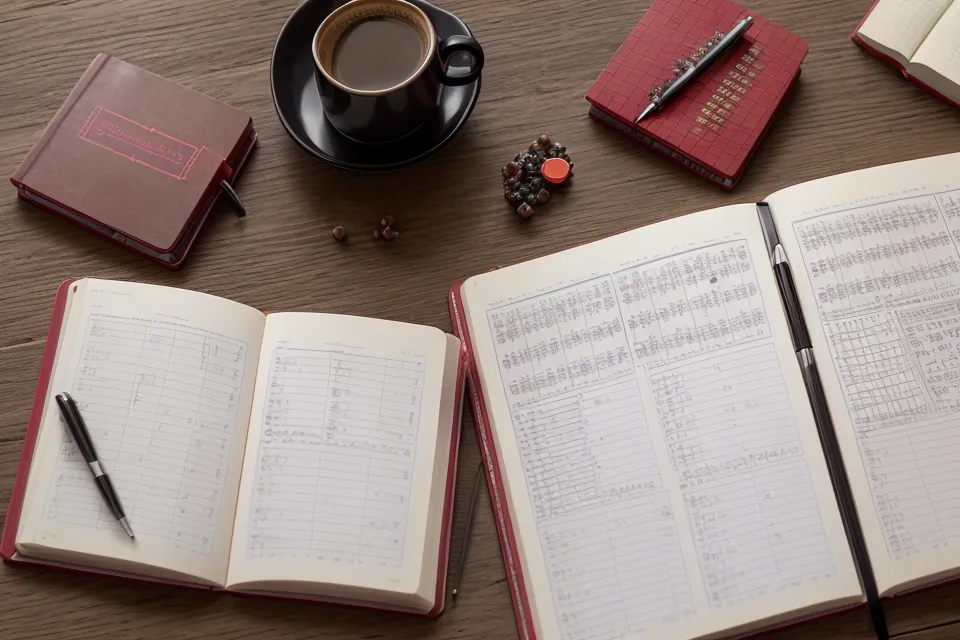
A university friend of mine, Zainab, works as a software developer in Leeds now, and she's the one person who reads my spreadsheets before I trust them. She's sharp enough to catch a methodological error before it quietly ruins months of data, and she was the one who pointed out that comparing my manual tally against a tool's output only means something if both are tested against the exact same draws, week for week. I've written about that parallel-testing process at more length in my Desk Drawer Notebook: What Six Months of Parallel Testing Taught Me About AI Lottery Patterns, but the short version is: without that discipline, you're just comparing two guesses and calling one of them science.
Why the Same Tool Reads Two Draws So Differently
This is where cross-market portability comes in, and it's the concept I keep returning to whenever someone asks if one AI lottery tool is simply 'better' than another. A pattern-detection model tunes itself to whatever data you feed it, and a smaller, single-country pool with a consistent machine and ball set produces a statistically different shape than a pooled draw aggregated across nine national lotteries with their own ticket volumes and reporting quirks. A tool that finds a genuine structural quirk in the Lotto's smaller field isn't necessarily finding the same kind of signal once you point it at EuroMillions, because the noise floor changes, the sample composition changes, and what counts as a meaningful pattern changes with it. It's a bit like a pundit who reads a Sunday league brilliantly being asked to call Champions League results. The underlying game is still recognisable, but the scale changes what actually counts as signal rather than noise. None of the platforms selling these tools are particularly transparent about which market their algorithm was actually tuned on, which is the detail I wish showed up in more reviews before people hand over their card details.

Four Weeks at the Kitchen Table
By the fourth week of running both draws side by side, I had a moment I still think about, mulled over mostly on slow laps of Sale Water Park rather than at a desk. Sat at the kitchen table on a Friday evening with my red-biro frequency chart on one side and the tool's shortlist open on the laptop screen on the other, I watched three numbers land on both lists at once, not because either method was psychic, but because a smaller, single-country pool gives structural quirks more room to actually surface. That kind of overlap almost never happened with EuroMillions, where the field is too large and too mixed for either method to agree with itself twice running. It's really just sample-size variance wearing a lottery costume, but it's the difference that convinced me the two draws deserve entirely separate tracking habits rather than one strategy stretched across both.
What LottoChamp Actually Does Differently
After about four months of manual data entry, I brought LottoChamp into the comparison to see whether its historical draw database could outperform my own frequency chart. It handled the smaller Lotto pool with noticeably more apparent confidence than it handled EuroMillions, cross-referencing clusters of numbers in a way my own hot-and-cold tallies could never manage by hand, which is a more sophisticated version of lottery frequency analysis than anything I can manage with a red pen and a Friday evening. The AI pattern detection itself isn't magic, it's a more patient version of the frequency counting I already do, just able to hold far more draws in its head at once. Configuring it properly matters as well — the draw and date range you feed it change what it flags as a cluster worth watching, a detail that rarely makes it into a glowing review. One thing that appealed to me on a teacher's budget was the sixty-day money-back guarantee, which is a reasonable window to decide the tool isn't for you rather than a discount dressed up as a bargain.
One reader, Neville, keeps his own EuroMillions ledger by hand and once sent me a breakdown that reads like a structural load calculation, the kind of rigour most of us don't bring to a lottery ticket, though I say that as a compliment. The criteria I actually weigh when judging one platform against another — clustering behaviour, honesty about what the algorithm can't do, how often the database updates — matter more to me than star ratings ever could.

Where Lotto Master Key Fits, and Where the Maths Still Wins
For readers who want something simpler than LottoChamp's dashboard, Lotto Master Key leans on a more streamlined wheeling system, which spreads your chosen numbers across several combinations rather than betting everything on one line. That approach has more room to matter on the Lotto's smaller pool and less room once EuroMillions' bigger field dilutes whatever advantage wheeling might offer, and if you want to see the two go head-to-head, I've written up LottoChamp vs Lottery Defeated separately. Neither tool changes the expected value of a ticket, which is the maths term for what you'd win on average if you played the same numbers many thousands of times over, and for both draws that number stays stubbornly negative no matter which software is running in the background. I keep a rough running total of what this whole experiment has cost me in tickets and subscriptions, mostly because cost-of-play accounting is the bit most lottery content conveniently skips, and because it's the easiest place for sunk-cost thinking to creep in — the pull to keep playing numbers you've already spent months tracking, rather than numbers the maths actually supports.
The One Rule I Take Into Every Draw Now
So here's where four weeks of side-by-side tracking actually left me: I stopped expecting any AI tool, or any hand-drawn chart, to behave the same way across two differently shaped lotteries, and I stopped judging a platform by a single good result on one draw. The one rule I've kept since is simple enough to write on a sticky note: test a tool against the specific game you actually play, over enough draws to mean something, before trusting a single shortlist it hands you.
That's not a way to shift the maths in your favour, because nothing is, and EuroMillions' expected value stays negative no matter how good the pattern-spotting gets. Whether you end up trying LottoChamp, sticking with something simpler, or just keeping a notebook like mine in a desk drawer, the honest version of this hobby is treating every draw as its own probability puzzle rather than assuming one tool's cleverness travels unchanged from one lottery to the next.