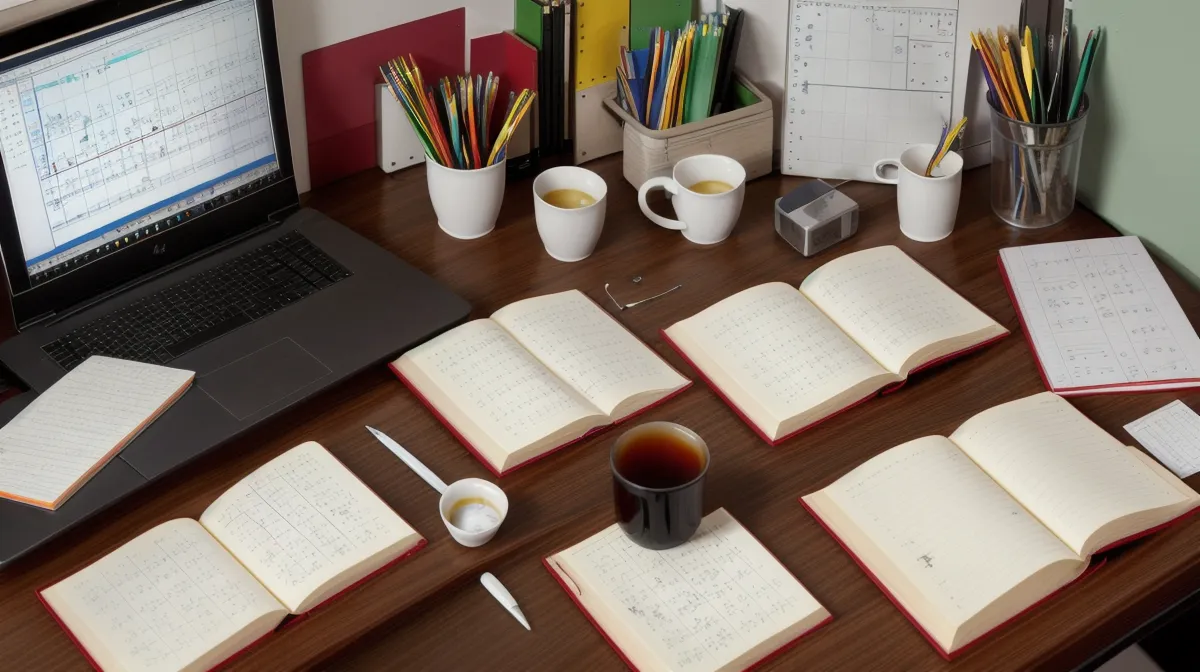
A handwritten notebook and an AI lottery tool are not supposed to agree on anything, yet for six months mine kept landing on the same handful of numbers more often than either one should have managed by chance alone. That single, stubborn overlap is what pulled me away from casual EuroMillions strategy and into something closer to a proper experiment: my own frequency analysis, tracked in ink, running week after week against whatever pattern an AI number analysis tool claimed to be finding in the same draws. I mark maths papers for a living and play EuroMillions the way most people do, out of habit and a small, persistent hope, but the teacher in me could not let a lottery probability question go once it had started nagging at me.
Before I get into what the notebook actually showed, a quick disclosure: this piece contains affiliate links, and if you buy one of the tools I tested through them I earn a small commission at no extra cost to you. That does not change what follows. I paid for my own access, logged every draw myself, and would happily tell you if a tool was rubbish, because not everything I tried was worth the download.
Two Ways to Read the Same EuroMillions Draw
EuroMillions asks you to pick 5 main numbers from 1 to 50 and 2 Lucky Stars from a separate machine holding 1 to 12. The Law of Large Numbers says that, given enough draws, every ball should turn up about as often as any other, which is the entire premise both my spreadsheet and any AI number-analysis tool are working from. Work out the probability properly, though, and the jackpot odds come out at 1 in 139,838,160, a number most people never sit down and calculate for themselves. I tell my Year 10s it is roughly the gap between one raffle ticket and a stadium selling out several hundred times over.
Where they differ is scale. I was cross-referencing two years of results by hand, and the software was chewing through a database that made my effort look like a school project, which, professionally, stings a little to admit.
Why I Started a Second, Secret Set of Numbers
My own frequency log did not start because of any of this. It started because a friend shared a link on Facebook to a "guaranteed lottery prediction" PDF, and out of morbid curiosity, I got hold of a copy. It was nonsense dressed up in a confident font: no method, no data, just a list of numbers and a promise. I mentioned it to Zainab, a friend from university who now writes software in Leeds, and she asked exactly the question I should have asked myself first, which was where the numbers had actually come from.
She has helped me tidy up the script that scrapes historical draw results ever since, on the condition that she never has to buy a ticket herself, a line she has held on principle for as long as I have known her.

Twelve Weeks In, the Numbers Started Talking Back
Once I started using LottoChamp alongside my own tracking, I kept both lists running side by side for six months rather than switching over completely. I wrote more about what changed once I made that swap in what actually happened when I swapped my spreadsheets for AI tools, from back when the comparison was still new. The tool itself won me over for a fairly boring reason: it did not promise a formula, just a large historical draw database and a 60-day money-back guarantee, which suited someone who wanted an exit if the numbers did not add up.
Twelve weeks into the log, I remember standing at the school photocopier waiting on a stack of worksheets, checking my phone for Friday's result not out of habit this time but because I actually wanted to know, which told me something about how the test was changing my own relationship to the draw before it told me anything about the numbers themselves. By that point my manual picks were still catching one number most weeks, while the AI-drafted list was landing two, occasionally three, often enough that it stopped looking like noise.

Independent Doesn't Mean Overdue
Here is the thing though: none of that makes any single draw less random. If my class saw the log, I would use it to explain the difference between a random event and an independent one, the same way I would explain that a coin does not remember landing on heads five times running before the sixth flip. A number that has not appeared in ten weeks is not "due" any more than a coin is due for tails; the machine has no memory, and every draw starts fresh, whatever a spreadsheet full of overdue-number flags might suggest. What the AI tool was actually doing, as far as I could tell, was not predicting anything, just filtering out the sort of clustered, human-shaped guesses, three numbers in a row because they felt right, that turn up far less often in real draws than people assume.
Whether that counts as genuine pattern detection or just competent filtering is a separate argument about what these systems are plausibly computing under the hood, and where the marketing outruns the arithmetic. One I will leave for another piece of writing rather than pretend I settled it in six months of evenings with a notebook.
Weighing LottoChamp Against Lotto Master Key
For anyone who wants a lighter touch than LottoChamp's full historical database, I also spent time with Lotto Master Key. It is a smaller system with less history behind it, but it converts curious visitors into buyers at a noticeably higher rate than most tools in this space, about 1.66 percent by the numbers I could see, which tells you more about how approachable its sales page is than about how well it predicts anything. If frequency charts and dual monitors sound like more effort than you want to put into a EuroMillions strategy, it is the more forgiving starting point of the two, even if neither one changes the maths of the game itself.
So What Did Six Months Actually Change?
The honest answer is not as dramatic as six months of testing might imply: no tool, mine included, beats the maths of the game, and nothing here is a promise that any system can. What changed is smaller and more useful than a win would have been. I now treat a pattern in the data as a filter for bad bets rather than a prediction of good ones, and I stopped putting any real weight on numbers that "feel" overdue.
One reader, Neville, a retired civil engineer who keeps his own EuroMillions results in a paper ledger, once sent me a handwritten comparison of his log against mine; it arrived, as his notes usually do, about a week after the draw it was actually about, which somehow made the maths behind it feel more trustworthy rather than less. My notebook still lives in the desk drawer at school, and the folding desk in my spare room in Didsbury still carries two screens, the draw database on one side and whatever I am writing on the other, with a biro update pending once Friday's result is in.
If you want to see where the swap from spreadsheet to software actually led, finding overdue lottery numbers for UK draws using LottoChamp picks up roughly where this piece leaves off, and if you would rather look at the database yourself, give LottoChamp a try and treat whatever it tells you as a filter, not a forecast.